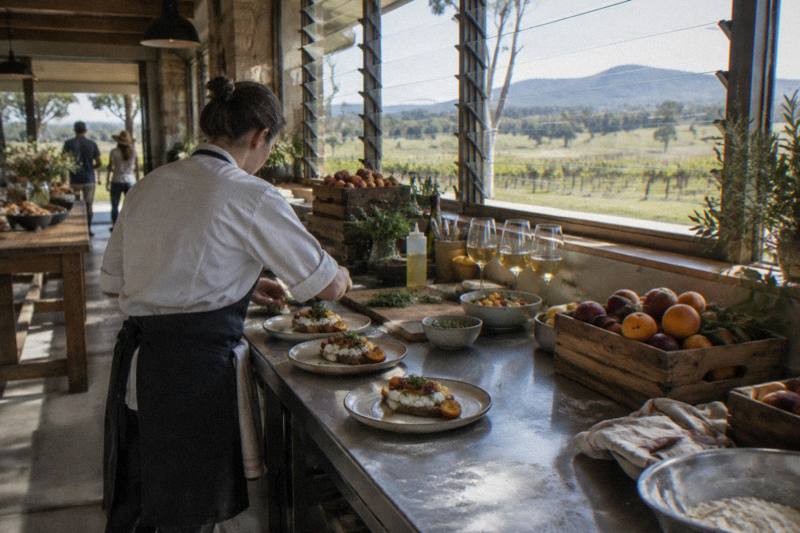
What Not To Wear To A Winery In The Hunter Valley?
What not to wear to a winery in the Hunter Valley: footwear, colours, fragrance and weather mistakes, with tour-specific advice for cellar doors, horse rides and tasting tours.
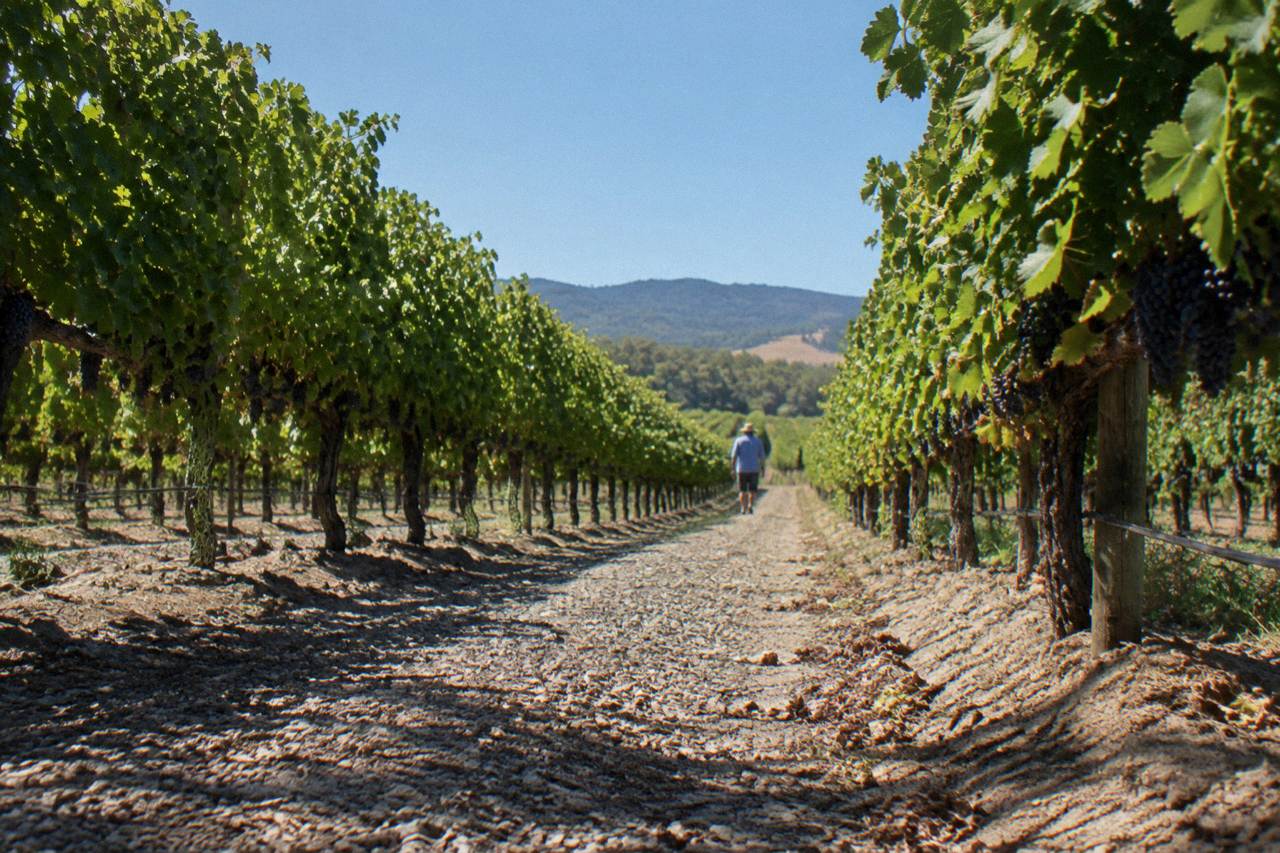
Nobody sets out to dress badly for a wine tour, yet every weekend somebody arrives in the valley wearing brand-new white sneakers on red dirt, or a heavy fragrance in a small tasting room, and spends the day regretting it. The Hunter Valley is Australia's oldest premium wine region, with more than 140 wineries and cellar doors spread across gravel roads, and almost none of it is designed for heels or stiff soles. The good news is that the fix is simple, and it starts with knowing what the ground underfoot is actually like. Once you know what the ground underfoot is like, the next question is what suits the weather, and our season-by-season guide to women's winery outfits in the Hunter Valley answers that from summer heat to winter frost.
What Not To Wear To A Winery In The Hunter Valley?
The short list of what to leave at home: stiletto heels, easily stained light fabrics, heavy perfume or aftershave, and open shoes if a horse ride is on the itinerary. None of this is a published dress code, because no cellar door enforces one. It is practical sense for gravel, grass, tasting benches and a climate that swings from 30 degree summer days to 4 degree winter nights.
The question people actually search, "What Not To Wear To A Winery?", has a different answer in the Hunter Valley than it does in a city wine bar. Here the tasting experience happens across venues. A typical day might start at one cellar door, move to a second across an unsealed driveway, then finish at a garden restaurant with lawns and timber decks. That is a lot of standing, walking and stepping between surfaces, and footwear carries most of the risk.
Consider how the guided days are built. The Snapshot Half Day Hunter Valley Wine Tour, a three hour small group run from A$129 per person with a 4.8 rating from 595 reviews, visits three venues in quick succession, which means three sets of steps, paths and parking areas in three hours. The Gourmet Getaway chef-led day from Sydney, the most reviewed tour on this roster at 5.0 from 792 reviews, adds breakfast and a long lunch but still moves between properties. Comfortable clothes that can handle a full day out, roughly 11 hours door to door on the Sydney departures, beat anything stiff or tailored.
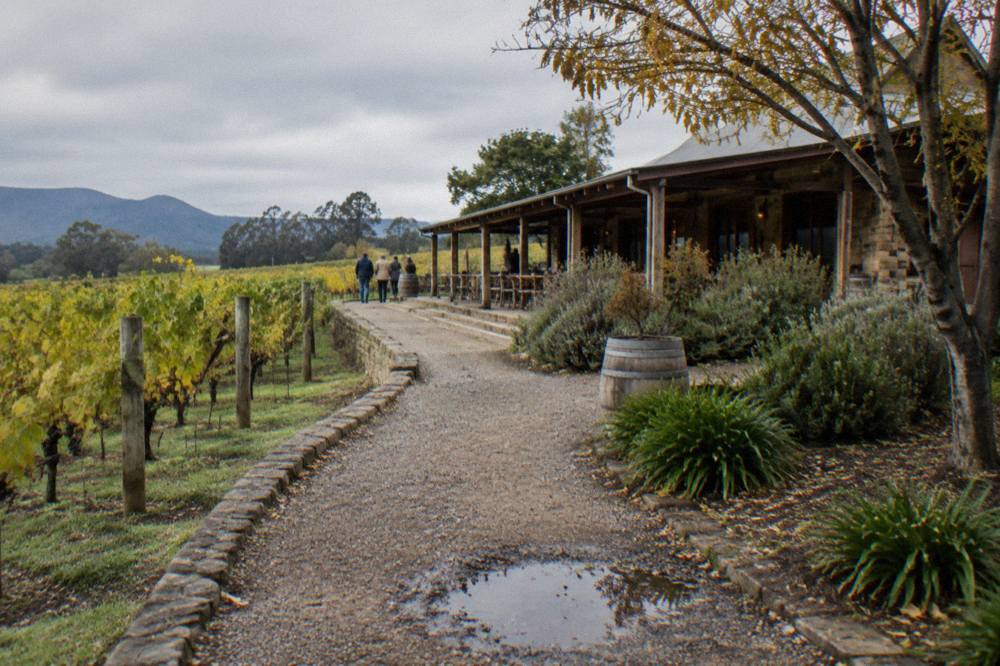
There is also the sunlight factor. Tastings often happen at outdoor benches or on verandas facing the vines, and the summer sun here is strong. Dark colours absorb heat; loose natural fabrics release it. In winter the reverse applies: the same veranda at 8am in July is cold enough that a proper jacket is not optional.
A third factor sits between the wardrobe and the wine itself: what you wear includes what you smell of. Tasting rooms are small, often holding a dozen guests at a single bench, and aroma carries. Between the ground underfoot, the sky overhead and the air in the room, the Hunter Valley asks three things of an outfit, and a city outfit usually only answers one.
Here is the practical summary of what to avoid and why, drawn from the realities of the region rather than any invented rulebook.
| What to avoid | Why it causes trouble | Better choice |
|---|---|---|
| Stiletto or narrow heels | Sink into gravel, lawn and garden paths at nearly every cellar door | Flat shoes, block heels, ankle boots |
| Brand-new white sneakers or light fabrics | Red dirt, mulched gardens and wine splashes stain quickly | Darker colours, worn-in shoes |
| Heavy perfume or aftershave | Competes with the wine at the bench and affects those around you | Skip fragrance on tasting days |
| Tight, restrictive clothing | Days run 3 to 11 hours with standing at each venue | Relaxed fits with layers |
| Flip-flops or sandals | Gravel, bees in spring and summer, and hot decks | Closed comfortable shoes |
| Open shoes on a horse ride | Stirrups and trail rules make closed shoes the safe choice | Enclosed shoes with a sole |
Which Shoes Cause The Most Trouble On Wine Tour Days?
Footwear is the single biggest wardrobe failure on Hunter Valley wine tours, and heels are the worst offender. Cellar doors sit behind gravel driveways and garden paths, gardens and vineyard rows are grass and dirt, and a day that visits three venues means hours on those surfaces. Flat or low, closed shoes with grip handle all of it; anything narrow, polished or brand new does not.
The regional tourism association makes the point indirectly but clearly when it advises that travel between cellar doors is best by vehicle or tour because they are not within walking distance of each other. The same logic applies to your feet: once you arrive at each door, you are on loose surfaces. The visitor information centre itself sits on Wine Country Drive in Pokolbin, a rural road, and the surrounding estate driveways are typically compacted gravel.
Boots are the quiet winner of Hunter Valley footwear. Ankle boots work in every season, pair with jeans or a casual dress, and shrug off dust. Clean sneakers are fine and worn by plenty of guests on the small group runs like the iHop Tastes of the Hunter Tour, a three hour pickup-included tasting circuit from A$146 per person with a 4.9 rating from 160 reviews. What matters is that the shoe is already broken in, because new shoes plus a six or seven hour valley day, such as the Uncork the Hunter full day at A$239 per person, is a blister waiting to happen.
The other footwear lesson is about the transitions rather than the walking. On most tours you step from a bus or van onto gravel, then indoors onto polished cellar door floors, then back out onto a deck or lawn, sometimes within the same hour. Shoes that cope with all three without slipping, sinking or tracking mud inside are the ones worth packing, and they are rarely the most fashionable pair you own.
How Does Hunter Valley Weather Change What You Wear?
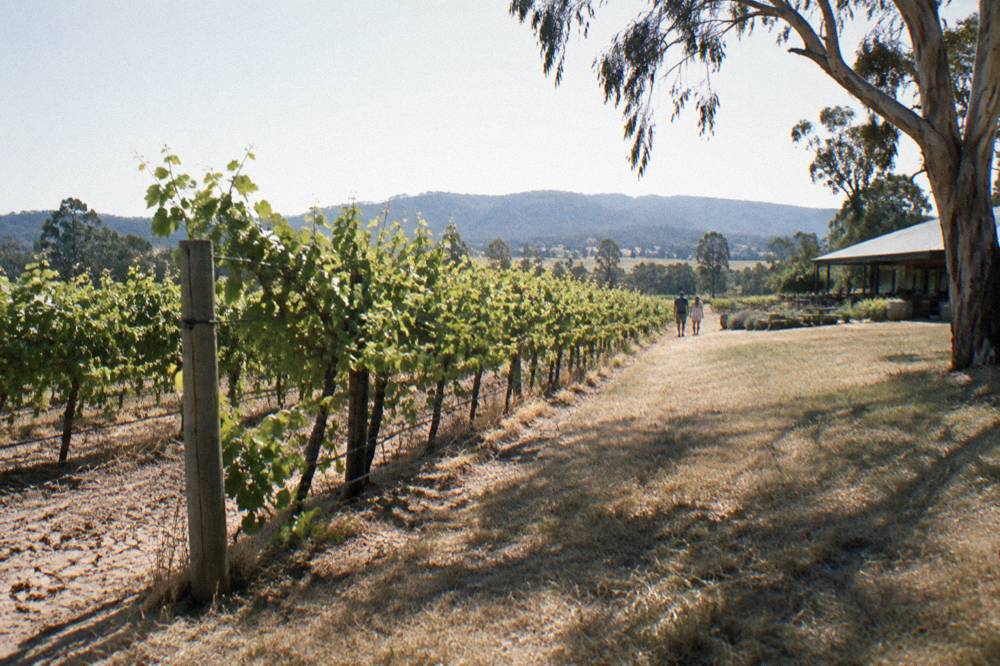
The region's climate is the real dress code. Bureau of Meteorology averages for Cessnock show a January mean maximum of 30.4 degrees and a July mean minimum of 4.2 degrees, with summer the wettest season. That range means loose, light layers in summer, real warmth in winter, and a rain option from December through February, whatever the forecast said on the drive up.
The long term averages, recorded at the Cessnock Airport weather station over more than three decades, give a clear seasonal picture. January is the hottest month and July the coldest; overnight lows through winter sit in the four to six degree range, which surprises visitors who picture Australia as permanently warm. The heaviest rainfall falls in summer, with February averaging 98.7 millimetres, so a light rain shell earns its place in a summer bag too.
| Season | Typical conditions | What to skip | What to wear instead |
|---|---|---|---|
| Summer, December to February | Mean maximum near 29 to 30 degrees, humid, heaviest rain | Dark colours, heavy denim, no hat | Light natural fabrics, hat, sunglasses, sunscreen |
| Autumn, March to May | Mean maximum easing from 27 to 21 degrees | Assuming warmth all day | Layers, light jacket for evening |
| Winter, June to August | Mean maximum 18 to 20, minimum 4 to 6 | Thin clothing, open shoes | Warm coat, scarf, boots |
| Spring, September to November | Warming through the low 20s, changeable | Skipping a layer | Shirt plus jumper plus light coat |
Guided tours run in all of this. The Sydney day trips, from the Colourful Collective coach at A$218 per person to Dave's small group tours at A$285 per person, operate year round, and the Balloon Aloft fiesta over the first weekend of October 2026 shows how early and cold an outdoor Hunter Valley morning can be. If a sunrise balloon flight such as the midweek Beyond Ballooning experience at A$279 per person is on your list, warm layers are non negotiable, the basket fields are grass and often damp. The full climate averages are published by the Bureau of Meteorology for Cessnock.
One more weather note worth planning around: the tours that start earliest are the ones that feel coldest, and the ones that run longest are the ones where layers earn their keep. A half day that starts at 10am in mild spring weather needs almost nothing. An 11 hour Sydney departure that leaves the city before 8am and returns after dusk crosses two temperature extremes and a lot of standing around, which is exactly the day a scarf and a foldable jacket were invented for.
What Should You Skip For Special Tours Such As The Horse Ride?
Any tour that leaves the tasting bench changes the clothing maths. The wine and harvest horse tour through Pokolbin vineyards, from A$159 per person with a 4.8 rating from 197 reviews, is the clearest case: closed shoes are the sensible choice for stepping up into the carriage, and loose flowing garments that can catch are not. The ride is horse-drawn, not saddle-bound, so shorts are not the liability they would be on horseback.
The horse tour departs from behind the Wine House on McDonalds Road in Pokolbin and runs three hours through working vineyard country, with wine, cheese and chocolate tastings built in. Groups can be large, up to 42 riders per the listing, so there is also a waiting-around element at the start: dress for standing outdoors, not just riding. Long trousers, closed shoes with a flat sole, and a top that tucks in or fits close will make the whole three hours more comfortable than any alternative.
Helicopter and balloon experiences have their own quiet rules. The Cessnock helicopter flight over wine country, from A$110 per person for ten minutes, caps the cabin at three passengers, and tight cabin space favours compact bags over large totes. Nothing on the listing states a dress code, but the practicalities of climbing into a small aircraft in a skirt or loose scarf are obvious. For a deeper look at the topic, the guide to what to wear to a Hunter Valley winery visit covers the positive side of the checklist.
Clothing choices also matter for the driver question, which is the other half of planning a tasting day. NSW drink driving law sets a 0.05 blood alcohol limit for full licence holders and zero for learners and provisional licence holders, including visitors on equivalent overseas or interstate licences, and Transport for NSW recommends not drinking at all if you plan to drive. A guided tour, with comfortable clothes and no car keys to worry about, is the natural fit.
Which Colours, Fabrics And Fragrances Cause Trouble?
Two things annoy people at a tasting bench more than any outfit: heavy fragrance and stained white clothing. Perfume and aftershave interfere directly with smelling wine, which is most of the tasting, and red dirt plus red wine makes light fabrics a gamble. Neither is a rule anyone will enforce, both are simple to avoid.
Wine tasting is overwhelmingly an aroma experience. The signature Hunter Valley styles prove the point: the region's Semillon is known for lemon and lime aromas and citrus crispness, and its medium bodied Shiraz for savoury characters that only come through the nose. A strong fragrance worn into a small tasting room sits over all of that, for you and for everyone standing within a metre of the bench, which at a busy cellar door on a Saturday is several people. Skipping scent on a tasting day costs nothing.
On colour, the valley's soil is famously red, and it finds its way onto hems, shoe edges and light trousers, especially after rain. Denim and darker tones hide it. If white clothing is part of your plan, keep it away from the tasting pour itself: swirls happen, and a red Shiraz splash on a white shirt is a souvenir nobody wants. For more on the practical side of packing, the piece on what to bring on a wine tour lists the non clothing essentials, and the lighter question of whether jeans work on a wine tour has its own answer, and it is a comfortable one.
Fabric weight is the quieter half of the same problem. Heavy denim and thick synthetics that feel fine in an air conditioned car become uncomfortable after an hour on a warm veranda, while thin fabrics that suit a summer afternoon leave you shivering when the same tour runs into the evening. Mid weight natural fabrics, cotton, linen blends and fine merino, cover the widest range of Hunter Valley days without any of the tradeoffs.
What Do People Actually Wear On Guided Wine Tours?
In practice, most guests on Hunter Valley wine tours wear smart casual clothes that could handle a long lunch: jeans or chinos, casual dresses, shirts, and flat comfortable shoes. Nobody dresses up beyond that, and nobody needs to. The valley's own guidance points the same way, a relaxed gourmet getaway, not a formal occasion.
The tone is set by the tours themselves. The Snapshot half day meets in Pokolbin and moves through three venues in three hours, a schedule that rewards practicality. The Two Fat Blokes cheese and wine tasting, a 45 minute seated experience at A$39 per person with a 4.9 rating from 152 reviews, is even more relaxed: you sit, you taste, you leave. At the other end, the premium full day tours from Sydney, such as the two-course lunch version from A$299 per person, include a proper restaurant meal, so one slightly smarter layer lifts the whole day without requiring anything formal.
Visitors often pair a tasting with a stay, and wardrobe planning is easier once the pace is settled, as discussed in the article on how long to spend in the Hunter Valley. A two night stay with a morning tour, a long lunch and an afternoon walk calls for exactly one repeated formula: layers in the morning, a comfortable base all day, and one warm piece for the evening. The regional tourism association describes the valley as a gourmet getaway best explored by vehicle or tour, and getaway is the operative word for dress standards.
Group tours add one final consideration: you will be photographed, a lot, by yourself and by others. That is usually the argument people make for dressing up a little, and it is a fair one. A collared shirt or a dress that photographs well costs nothing in comfort if the shoes underneath are still flat, and it means the pictures from the vineyard viewpoint look as good as the day felt.
Is There A Dress Code At Hunter Valley Cellar Doors?
No official dress code applies at Hunter Valley cellar doors, and no source on this region publishes one. What exists instead is a set of practical realities: gravel, grass, sun, cold mornings, aroma-sensitive tasting rooms and occasionally a saddle. Dress for those and you will be better dressed than most, without ever needing to think about a rule.
That absence of a code is worth stating plainly, because searches for winery dress codes often surface advice that implies bouncers and black ties. Nothing of the sort operates here. Audrey Wilkinson's fromage and fortified experience, from A$80 per person at its Pokolbin cellar door, happens at a scenic hillside property where the walk from the car park alone justifies flat shoes; the picnic and wine masterclass version at A$95 per person adds lawns and hamper rugs to the day. Neither asks anything of your outfit beyond comfort.
The honest summary from this site, Hunter Valley Winery Tours, is that the best dressed people in the valley are usually the most comfortable ones. Swap heels for boots, fragrance for nothing, white for denim, and stiff tailoring for layers, and every style of day works: a quick 45 minute tasting, a three venue half day, a full Sydney departure with lunch, or a sunrise flight over the vines.
Common Questions About Winery Outfits
What Not To Wear To A Winery?
Leave behind stiletto heels, easily stained light fabrics, heavy perfume or aftershave, and open shoes if a horse ride is on the itinerary. These are practical cautions for gravel paths, lawn, sun, cold mornings and aroma-based tasting, not published rules.
Can you wear jeans on a wine tour?
Yes. Jeans are one of the most practical choices in the Hunter Valley: they handle red dust, work in every season with the right layers, and suit every tour style from a 45 minute tasting to a full day from Sydney.
Do Hunter Valley wineries have a dress code?
No official dress code exists at Hunter Valley cellar doors. Smart casual is the practical standard, with flat comfortable shoes being the only near universal recommendation because of gravel driveways and garden paths.
What shoes should I avoid at a winery?
Avoid narrow or stiletto heels, which sink into gravel and lawn, and brand-new shoes of any kind, which blister over a multi venue day. Flip-flops and sandals offer little protection on gravel and hot timber decks.
What should I wear on the Pokolbin horse and wine tour?
Long trousers and closed, flat-soled shoes are the sensible choice for the three hour wine and harvest horse tour, which departs from McDonalds Road in Pokolbin. Avoid loose flowing garments, and dress for standing outdoors before and after the ride.
Is a Hunter Valley wine tour warm or cold?
Both, depending on the season. January averages a maximum of about 30 degrees while July nights average around 4 degrees, so light layers suit summer and a proper coat suits winter, with rain gear useful in the wetter summer months.